
Cracking the INI-SS (Institute of National Importance Super-Specialty) exam is a dream for many medical postgraduates. Hematopathology is a uniquely dynamic branch—one that bridges clinical pathology, morphology, multi-parametric flow cytometry, and cutting-edge molecular genetics.
To help future aspirants navigate this intense journey, three top rankers share their unique journeys, personal setbacks, and the exact strategies they used to conquer the exam and secure their spots at India’s premier medical institutions.

🚀 The Journeys to the Top
🩺 Dr. Anirban Kundu (Rank 1, AIIMS)
Dr. Anirban completed his MD in Pathology from AIIMS Bhubaneswar. His journey emphasizes pure resilience. In his first attempt right out of residency, he missed qualifying by a mere single mark during an exceptionally tough exam cycle where not a single candidate nationwide met the minimum qualifying cutoff.
Instead of pausing, he secured a highly competitive Hematopathology fellowship at Tata Medical Center (TMC), Kolkata. Balancing full-time diagnostic duties as an Associate Consultant with a rigorous 3-to-4-month study block, his relentless drive culminated in securing the coveted AIIMS Rank 1 (choosing to join PGI Chandigarh).
🩺 Dr. Erna Ahsan (Rank 3, AIIMS / Rank 1, Common Merit List)
Fresh out of her residency, Dr. Erna cracked the INI-SS exam on her very first attempt. Her passion for the branch stems from its evolutionary nature. Unlike histopathology, which often provides a static diagnostic snapshot, hematopathology requires continuous, dynamic patient management. She was drawn to its longitudinal nature—tracking patients over time through Minimal Residual Disease (MRD) monitoring, evaluating targeted therapies, and catching early molecular relapses.
🩺 Dr. Akshita Rakheja (Rank 4, AIIMS / Rank 2, Common Merit List)
Dr. Akshita completed her MD from the renowned Grant Medical College, Mumbai. While fulfilling her mandatory government bond service as a Senior Resident , she noticed a distinct gap in her training: while her morphology skills were strong, she lacked hands-on confidence in interpreting raw laboratory data like flow cytometry gating and complex cytogenetics. Driven to bridge this practical gap, she launched a high-velocity preparation cycle, mastering the vast syllabus in less than two months.
🛠 The Winning Strategies: How They Did It
While every topper has an individual learning style, their paths intersected on several crucial preparation strategies:

1. Build a Rock-Solid Foundation (Don’t Skip General Path!)
A common trap for super-specialty aspirants is focusing exclusively on malignant hematology. The toppers strongly warn against this:
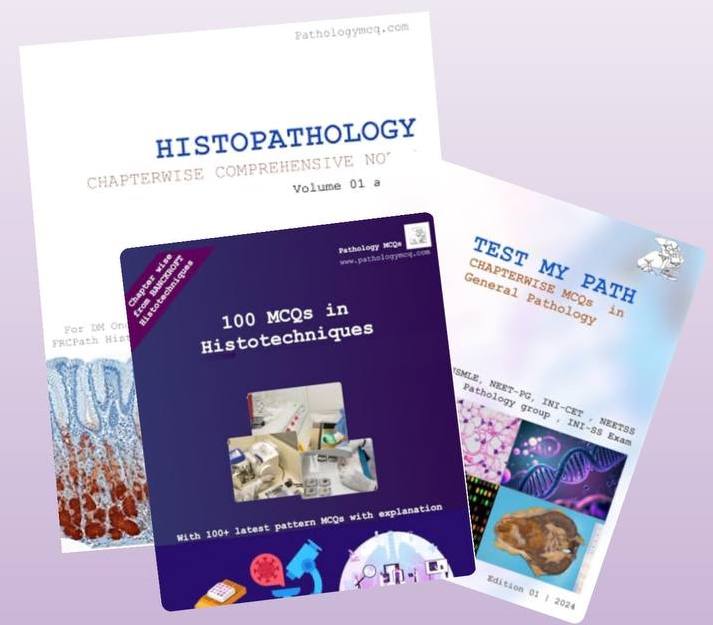
- The “General Path” Secret: Dr. Anirban and Dr. Erna both highlighted that General Pathology principles (neoplasia, inflammation, and genetic mechanisms) remain the true cornerstone of the INI-SS paper. – Get the general pathology notes here
- Master Benign & Lab Basics: Ensure equal competence in benign hematology (hemolytic anemias, hemoglobinopathies), complex coagulation profiles, transfusion medicine, and basic histotechniques. – Get the hematopathology notes here
2. Deconstruct the WHO Blue Book Algorithmically
Dr. Erna swears by reading the standard WHO Classification of Hematolymphoid Tumors, but advises against treating it like a dry list of diseases. Instead, look at its predictable, narrative structure for every entity:
Definition⟶Epidemiology⟶Pathogenesis⟶Morphology⟶Immunophenotyping/Flow⟶Prognosis
By studying every disease in this exact sequence, you train your mind to build clean, algorithmic differential diagnoses that will serve you immensely in both the written exam and the interview rounds. Get the hematopathology notes here
3. Transition from Rote Learning to Case-Based Logic
The exam pattern has rapidly evolved. Memory-based, direct factual questions are being replaced by multi-tier, scenario-based applications. The toppers emphasize that your preparation must mirror a real clinical workup:
- Understand how a case starts with a basic CBC.
- Correlate it with peripheral blood smear (PBS) and bone marrow morphology.
- Integrate it logically with flow cytometry immunophenotyping or cytogenetics.
📈 The High-Velocity Revision Workflow
When balancing full-time residency or consultant duties, time management is everything. The toppers successfully optimized their limited hours by shifting from passive reading to active validation:
- Micro-Study & Instant Recall: Rather than reading massive textbook chapters end-to-end, break the syllabus down into hyper-focused sub-topics. Read a micro-block of theory, and immediately solve a tiny quiz of 8–10 targeted questions to lock the information into your short-term memory.
- Macro-Consolidation: Once a complete system is finished (e.g., finishing all platelet and coagulation disorders), complete a comprehensive Master Quiz (~50 complex, multi-statement questions) to evaluate your overall control of the subject.
- The 5-Day Simulation Drill: In the final week before the exam, stop opening textbooks. Dedicate your final days entirely to full-length grand mock tests and Previous Year Questions (PYQs). This builds the stamina needed to jump between unrelated topics seamlessly and manages exam-room anxiety. – Online course with PYQ discussions and mocks
🧠 Psychological Tactics for Exam Day
- Expect the First-Half Trap: Dr. Erna noted that the first half of the written exam is traditionally packed with complex, intimidating, multi-statement questions designed to induce panic. Expect this psychological hurdle. If you face tough questions initially, do not get stuck—remain calm, maintain your momentum, and pick up easy marks in the more doable second half.
- Resource Discipline is King: Do not chase five different books or look for multiple question banks. Pick one reliable, concise specialty resource, master it, and revise it 3 to 4 times.
- Interview Readiness: For the final interview rounds, practice data interpretation. Be completely comfortable explaining raw visual data, such as flow cytometry gating plots or cytogenetic profiles, in a structured, step-by-step manner. Online course with PYQ discussions and mocks
Your turn: Which area of Hematopathology do you find the most challenging to prepare for? Let us know in the comments below, and happy studying!


Leave a Reply